Picture the scene. An organisation invests close to half a million euros in a digital transformation programme. The consulting firm delivers a 147-page roadmap: every phase documented, every milestone defined, every risk mitigated on paper. Eighteen months later, a fraction of it has actually changed.
What failed? Not the framework, which was structured, logical and complete. What failed was the assumption that transformation comes from following a documented process rather than from building the organisation's own capability.
That is the consulting industry's uncomfortable truth: many transformation frameworks are optimised for the consultant's efficiency, with standardised delivery, repeatable methods and billable phases, rather than for the client's capability to change and keep changing.
The Framework Fallacy
McKinsey's 7-S framework, Kotter's 8 steps, each large firm's proprietary change methodology: all claim better results through their particular sequencing of phases. Most share the same underlying logic:
- Assess the current state
- Define the target state
- Analyse the gap
- Design the solution
- Implement the change
- Measure the results
The linear sequence makes intuitive sense. It is usually sold alongside a famous figure: "70% of change programmes fail". That figure deserves a closer look. In a 2011 paper in the Journal of Change Management, Mark Hughes traced the five most cited sources of the claim and found no valid, reliable empirical evidence behind it. The irony is hard to miss: a statistic that sells change consulting rests on very little.
The real problem is not a failure rate; it is three flawed assumptions built into framework thinking.
Assumption 1: Change Is Linear
Framework logic: complete phase 1, then phase 2, then phase 3.
Organisational reality: change is iterative and messy. Teams learn by doing, discover new constraints mid-way and must adapt, rather than follow a predetermined sequence.
Example: a French insurer with around €450 million in premiums followed its consultant's phased approach and spent months designing the perfect organisational structure before implementing anything. By the time the design was finished, market conditions had shifted and three key executives had left. The design was obsolete before deployment.
Assumption 2: Transformation Is Technical
Framework logic: define new processes, implement new systems, train users, measure adoption.
Organisational reality: transformation is cultural. It changes how teams coordinate under pressure, how departments share information and how people respond when familiar patterns stop working.
Example: a Belgian company rolled out a new ERP system following its consultant's change management framework. Training completion reached 94%; actual use six months later, 31%. The framework addressed technical competence but ignored trust: teams did not trust the new system enough to give up their spreadsheets.
Assumption 3: Success Is Measured by Framework Milestones
Framework logic: track completed phases (phase 1: 100%, phase 2: 100%, phase 3: 75%).
Organisational reality: success shows up in behaviour: faster coordination, better decisions under uncertainty, the ability to adapt when conditions change.
Example: consultants report a transformation "85% complete" on milestones. Then an unexpected market shock arrives, and the organisation responds with its old coordination habits. The framework measured activity, not capability.
Why RESONANCE™ Builds Capability, Not Just Process
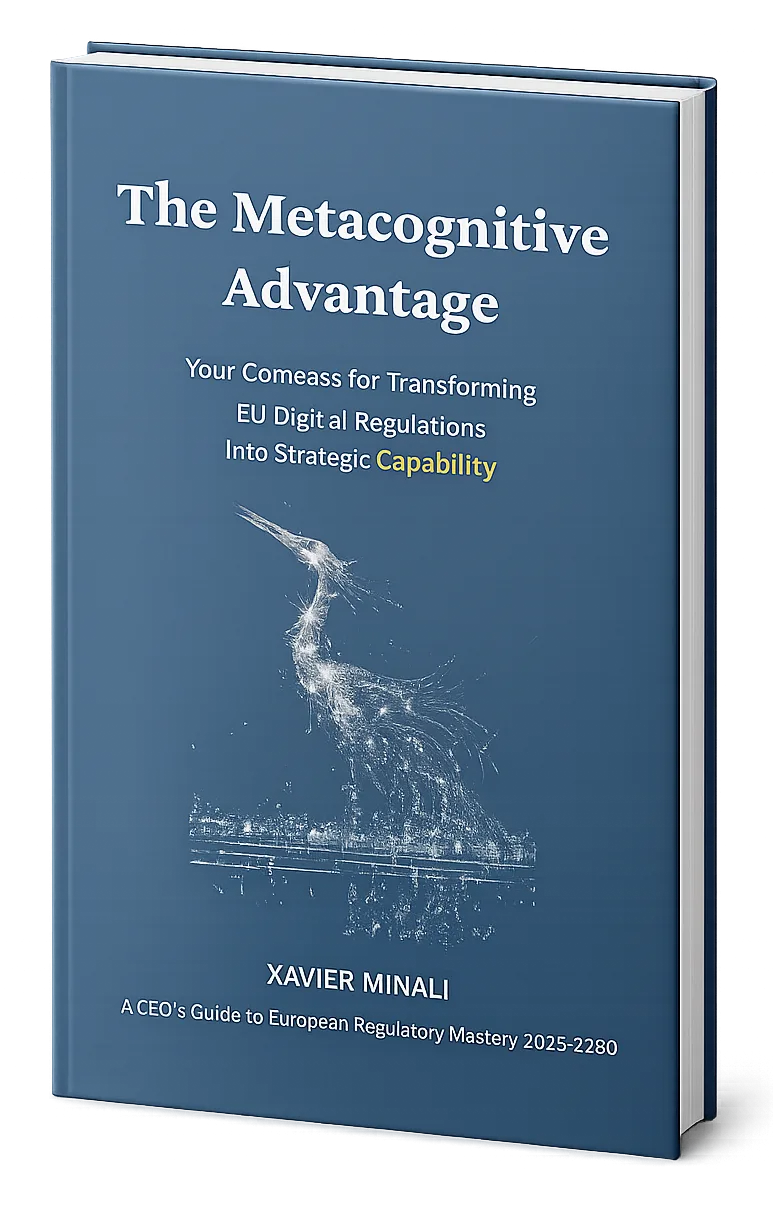
The RESONANCE™ framework, set out in chapter 7 of The Metacognitive Advantage, treats organisational change as a capability to build, not a linear process to follow.
Foundation: The Three Cultural Predictors
Before prescribing anything, RESONANCE™ assesses the organisation on three dimensions, described in chapter 6 of the book:
1. Organisational nervous system: how does information travel across functional boundaries when speed matters?
2. Pain reflex: when problems surface, are they escalated early or hidden until they become crises?
3. Adaptive immune system: when a change meets resistance, does the organisation learn and adapt, or fall back on established patterns?
These predictors decide whether a transformation takes hold or is rejected like an incompatible transplant. The first of them is developed in the article on the learning organisation.
Phase 1: Audit (Recognize)
Standard consulting approach: document current processes and identify gaps against best practice.
RESONANCE™ approach: map the real coordination architecture: how the organisation actually decides under pressure, not how the org chart says it should.
Critical difference: a standard audit measures process compliance; the RESONANCE™ audit measures coordination capability.
Phase 2: Scoping (Empower)
Standard consulting approach: set programme boundaries from strategic objectives and budget.
RESONANCE™ approach: set boundaries from cultural capacity: what can the organisation absorb without overloading its coordination?
Critical difference: standard scoping asks "what should we change?"; RESONANCE™ scoping asks "what can we change without breaking what already works?"
Phase 3: Boundaries (Secure)
Standard consulting approach: set up governance, steering committees and escalation paths.
RESONANCE™ approach: create psychologically safe zones where teams can experiment, fail safely and adjust how they coordinate without being overruled by hierarchy.
Critical difference: standard boundaries define control; RESONANCE™ boundaries create room to learn.
The Uncomfortable Question for Consulting Firms
If transformation depends on building the client's capability rather than following a documented framework, the traditional consulting model comes under strain. Capability development is:
- Non-linear: it cannot be packaged into standard 12-week phases
- Context-dependent: it cannot be replicated across clients with light customisation
- Relationship-intensive: it needs consultants who understand the client's culture, not just the method
- Lower-margin: fewer billable hours of framework delivery, more time spent coaching
That helps explain why frameworks keep selling. The same mechanism is visible in how the large firms package their own methods, as discussed in the ranking of eight transformation frameworks.
What You've Discovered
If your organisation has paid for frameworks that produced impressive documentation but little lasting change, you have diagnosed something important: you were sold a map, not the ability to navigate.
RESONANCE™ does not claim to have a better map. It holds that transformation succeeds when the organisation learns to navigate: to coordinate under pressure, adapt when conditions shift and learn from failure instead of hiding it.
The regulatory deadlines of 2026, e-invoicing, the AI Act and eIDAS 2.0, have already started to show which organisations built capability and which only documented processes. How those deadlines interact is covered in the article on regulatory convergence.
Take Action
The full method, with tools for assessing the three predictors, is in The Metacognitive Advantage. To see where your organisation stands today, start with the free assessment.
Assess your transformation capability
Sources
Sources consulted for this article, list updated in November 2026.