Your organisation has invested heavily in a continuous improvement culture: daily huddles, regular retrospectives, steady optimisation of existing processes, teams free to make small changes without asking permission.
Then the regulatory wave arrives: mandatory e-invoicing, the AI Act, the eIDAS 2.0 digital identity wallet. These are not incremental improvements. They change how finance, IT, legal and operations coordinate.
And the improvement machine stalls.
This is the Kaizen paradox: organisations that excel at incremental optimisation often struggle with discontinuous transformation. The culture that makes small improvements safe can make large changes almost impossible.
Why Kaizen and transformation are different capabilities
Kaizen (改善, "change for the better") comes from the Toyota Production System: front-line workers identify and fix problems in their immediate work environment. In practice, the approach rests on a few assumptions:
- problems are local, within the team's boundaries;
- solutions are incremental, small adjustments to a process;
- change is reversible: if an improvement fails, you roll it back;
- authority is distributed: teams decide without escalating.
Those assumptions build a strong capability for continuous optimisation. They also create blind spots. Lean thinking itself knows this: it distinguishes kaizen from kaikaku, the radical, rapid improvement of a whole value stream, sometimes called breakthrough kaizen. The paradox is not Kaizen's fault. It comes from organisations that only ever learned one of the two modes. How Kaizen builds an improvement culture in the first place is covered in the research-based analysis of Kaizen in workplace culture change.
Picture a hypothetical logistics company whose operations teams run hundreds of small improvements a year, each decided in a matter of minutes. Then the AI Act requires data science, legal and operations to agree on transparency rules for an algorithm used in planning. Every assumption breaks at once. The problem is not local: it spans three departments. The solution is not incremental: it changes who decides. The change is not reversible: a regulatory commitment, once made, stays made. And authority cannot be distributed: someone has to mandate cross-functional governance. The same organisation that decides small improvements in minutes takes months to set up one governance structure.
In the terms of The Metacognitive Advantage, this is the adaptive immune system at work, the third cultural predictor described in chapter 6. It asks whether unexpected problems trigger coordinated, enterprise-wide solutions (antibodies) or isolated departmental workarounds (scar tissue). A Kaizen culture without a transformation mode tends to produce excellent scar tissue: every team fixes its own patch, and nobody fixes the whole.
The three Kaizen traps that block transformation
Trap 1: local optimisation creates global rigidity
Kaizen lets teams optimise their own processes. Over time, each team builds workflows finely tuned to its function. Those locally optimal processes become tightly coupled to the current state, and when transformation demands cross-functional coordination, teams resist because the change would break what they have perfected.
Take the finance team that has refined its supplier invoice workflow over years. E-invoicing requires integration with procurement and IT systems. Finance resists, because integration would slow its process at first, even if the organisation as a whole gains from it. Local maximum, global loss: what is best for each team blocks what the organisation needs to adapt.
Trap 2: incremental thinking rejects discontinuous change
A Kaizen culture trains teams to ask "how can we make this process slightly better?". When transformation needs a different coordination architecture, teams apply incremental logic and fail.
A DORA resilience exercise shows an incident escalation path far slower than planned. The Kaizen reflex is to shave a few minutes off each handoff. The transformation answer is to redesign the path and remove handoffs altogether. The article on DORA operational compliance shows why only the second answer fits the reporting deadlines. Teams trained in incremental thinking struggle to imagine it.
Trap 3: distributed authority cannot mandate coordination
Kaizen distributes improvement authority: teams change what lies within their boundaries without escalating. Transformation needs coordination that no single team can mandate, and distributed authority turns into distributed paralysis.
E-invoicing requires finance, procurement, IT and legal to agree on shared data models. Each team can improve its own processes; none can impose alignment on the other three. Change stalls while everyone waits for someone with the authority to decide, in a culture that has learned that change should not need a top-down mandate. Left unchecked, the pattern hardens into cultural ossification.
How RESONANCE™ bridges Kaizen and transformation
The RESONANCE™ framework, set out in chapter 7 of the book, does not oppose Kaizen. It uses it: phase 6, Refine, applies the Kaizen principle to the methodology itself. What it adds is a deliberate way to switch modes, starting with the three foundation phases.
Phase 1: Audit (Recognize)
Diagnose where continuous improvement has created local optimisations that block global coordination. Map current improvements and identify which ones the transformation would disrupt, assess whether unexpected problems lead to shared solutions or local workarounds, and locate the friction points where distributed authority cannot force alignment. The deliverable is a readiness map showing where the Kaizen culture enables change and where it blocks it.
Phase 2: Scoping (Empower)
Define transformation boundaries that keep what is valuable in the Kaizen culture. Separate optimisation zones, where Kaizen continues, from transformation zones, where discontinuous change is required. Set clear criteria for when a change can be decided locally and when it needs an executive mandate, and plan how teams move from one mode to the other. The deliverable is a dual-mode programme charter.
Phase 3: Boundaries (Secure)
Create the psychological safety for teams to accept discontinuous change without reading it as a rejection of their past achievements. Recognise Kaizen successes explicitly, run safe-to-fail pilots where teams can experiment with bigger changes, and write down when a top-down mandate is legitimate and when distributed authority works. The deliverable is a co-created charter that legitimises both incremental improvement and transformation.
What you've discovered
If your organisation excels at continuous improvement but struggles with regulatory transformation, you have diagnosed something important: Kaizen builds optimisation capability; transformation needs adaptation capability. They are different competences.
The Kaizen paradox shows that a culture built for incremental change can resist discontinuous change, not because teams lack skill, but because the organisation has only learned to respond to problems locally. The way a learning organisation coordinates across those local boundaries is the subject of the article on the organisational nervous system.
The obligations landing in 2026 and 2027, e-invoicing, the AI Act and eIDAS 2.0 among them, test whether your organisation can switch into transformation mode while keeping its improvement culture. The article on regulatory convergence sets out that calendar.
Take action
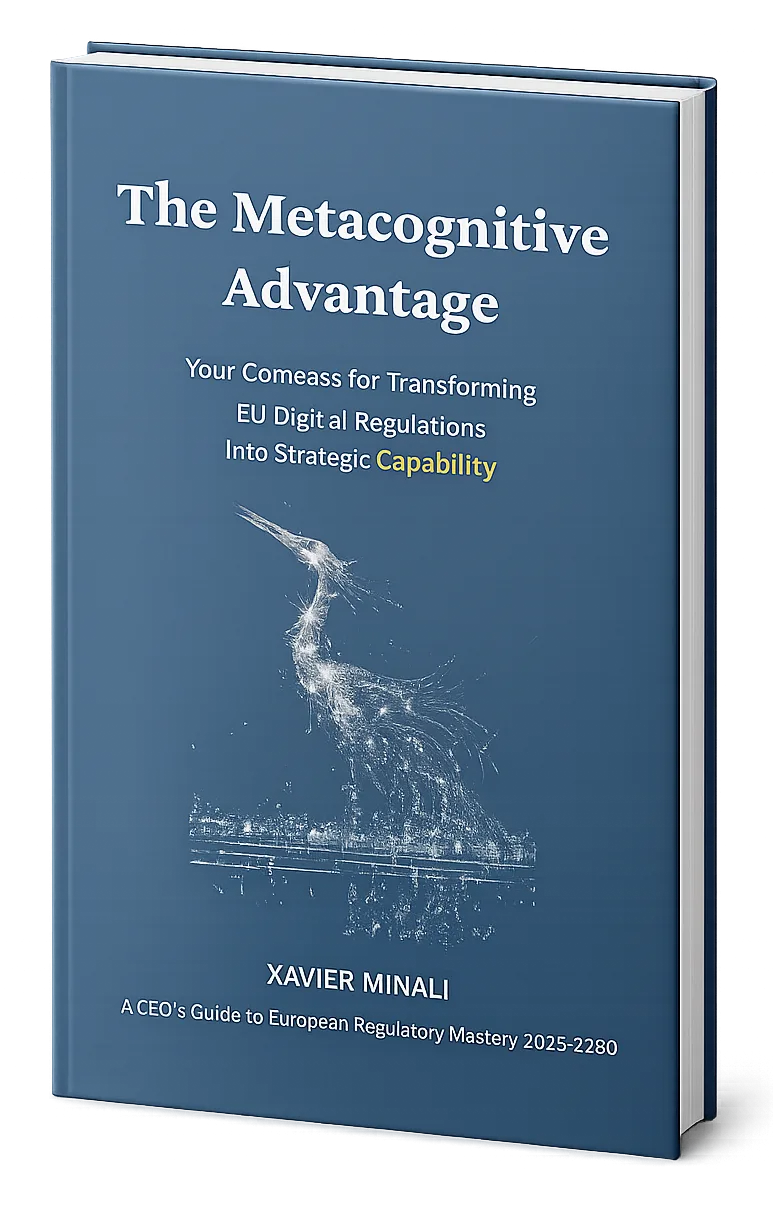
The full RESONANCE™ method, with its diagnostic for the three cultural predictors, is in The Metacognitive Advantage. To see whether your improvement culture helps or blocks transformation today, start with the free assessment.
Assess your transformation readiness
Sources
Sources consulted for this article, list updated in November 2026.
Lean and book
- Lean Enterprise Institute, Lean Lexicon: kaikaku
- Minali X., The Metacognitive Advantage, chapters 6 and 7