In many French companies, digital transformation begins with a logical step: appointing someone to lead the change. A change manager arrives, designs the plan, trains the teams, runs the communication and holds the steering committee.
Six months later, adoption has plateaued. Not because the change manager lacks competence, but because lasting change cannot be delegated to a single role. Three roles are often used interchangeably and do very different work in practice: the change manager, the interim manager (manager de transition, common in French mid-sized companies) and the change agent.
This article clarifies what each role does, names the one most leaders overlook, and ends on a structural detail worth knowing in advance: the moment you turn a change agent into a manager, you usually destroy their effectiveness.
Change manager, interim manager, change agent: clarifying the roles
The change manager: necessary, but not sufficient
Appointing a change manager fits the way many French companies already think about change: as a project to be managed. The role brings structure, method and accountability, and it works well in hierarchical companies where clear responsibilities matter.
A change manager generally:
- holds a formal title and a project mandate
- works on processes, training plans and communication
- draws authority from the organisational hierarchy
- operates within a defined project window
- measures success through adoption rates and milestone delivery
The approach has its merits. It is clear, and it lets leadership assign the transformation to a responsible person without changing existing structures.
The interim manager: a defined mission, a finite mandate
Common in French mid-sized companies during turnarounds or accelerated transformations, the interim manager arrives with a contractual mandate that typically runs 6 to 18 months. The value lies in concentration: a defined outcome, a defined timeframe, executive authority by contract.
An interim manager generally:
- works as an external executive, time-bound by design
- carries strong delegated authority for the duration of the mission
- delivers a measurable result: a turnaround, a system rollout, a post-acquisition integration
- leaves once the mandate is fulfilled
When the mission is bounded and the company needs a temporary executive resource, the role is well suited. When the work is about sustained behavioural change, the role alone will not carry it.
The change agent: the missing complement
Transformation tends to stick when it spreads through informal networks, not only through formal plans. That is where the change agent works.
A change agent, or tempered radical in Debra Meyerson's terms, generally:
- exists at any level and in any function, often without "change" in their title
- works on cultural adoption, peer influence and the connections between departments
- draws authority from trust, expertise and relationships
- operates continuously, embedded in daily work
- measures success through lasting behavioural change and the slow spread of new habits
The role is described in more depth in the article on how the agent of change drives digital transformation.
Change managers orchestrate transformation. Interim managers deliver a defined mission. Change agents embody change and let it spread through the informal fabric of the company.
Why the confusion?
Several things blur these roles. The vocabulary is loose: "change agent" gets used for anyone involved in a transformation. Organisational design tends to favour formalising a role over cultivating a distributed capability. And there is something reassuring about appointing one responsible person rather than spreading the work of change across many.
None of this is a flaw; it is a starting point. The more useful question is not whether you need a change manager, but who else, beyond that one role, will need to act as a change agent for the transformation to take root.
The tempered radical: a practical archetype for French organisations
Defining the concept
The change agents who succeed inside French organisational culture often embody what Stanford researcher Debra Meyerson calls a "tempered radical": a principled insider who challenges norms without alienating colleagues (Meyerson and Scully, 1995; Meyerson, 2001).
They rock the boat without falling out. They stay committed to the organisation while pushing for practices the status quo would resist. Their tools are incremental influence, cultural fluency and strategic patience, all of which travel well in French business settings where direct confrontation tends to backfire.
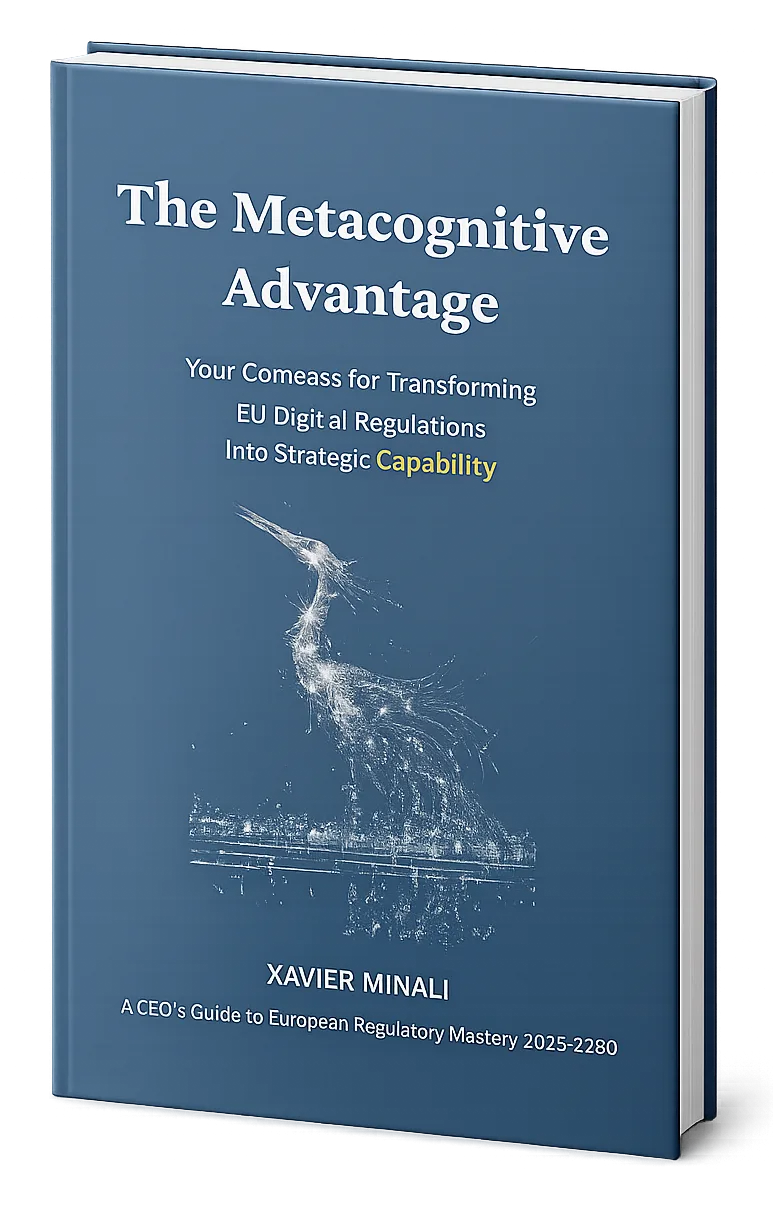
Chapter 8 of my book, The Metacognitive Advantage, "Building alliances for implementation", goes deeper into this archetype, with practical tools for spotting and supporting these people inside a real organisation.
The dual-currency model
Two forms of currency predict whether someone will be effective as a change agent. The first is expertise currency: technical competence, digital literacy and, increasingly, regulatory knowledge (AI Act, GDPR, DORA, e-invoicing). The second is relational currency: trust networks, informal influence, cultural fluency and a feel for how the formal and informal sides of an organisation actually interact.
Mapping people against these two axes produces four profiles:
| Low expertise currency | High expertise currency | |
|---|---|---|
| High relational currency | Cultural connectors (trusted, need upskilling) | Prime change agents (the target) |
| Low relational currency | Emerging contributors (learning phase) | Technical specialists (deep skills, limited informal influence) |
Relational currency in France often comes from Grandes Écoles networks, length of service or a track record in building consensus. Expertise currency increasingly demands regulatory literacy as well as technical fluency.
Most organisations already have a handful of people in the prime change agent quadrant. The strategic question is whether anyone has identified them, given them room to act and protected them when needed.
Identifying and empowering change agents
Spotting tempered radicals in your organisation
Look beyond titles. In French companies, real influence often moves through informal channels: corridor conversations where complex issues get unpacked, cross-functional problem-solving outside formal meetings, moments of ambiguity when people quietly seek guidance outside their hierarchy.
A few behavioural indicators:
- they start improvements without waiting for formal authority
- they handle ambiguity without paralysis or complaint
- they build working connections between IT, legal, operations and employee representatives (the CSE, France's works council)
- they raise concerns in a usable form ("how might we address X?") rather than a final one ("this will never work")
- they are "bilingual" between technical complexity and business language, in both directions
A ten-minute exercise. Write down the five names you would call if you had to make a critical decision this afternoon. Compare the list with your org chart. The gap between the two is your transformation map, and the names that surface laterally, not vertically, are usually your change agents.
Formalising support without neutralising impact
Once they are identified, how do you support these people without removing the informal influence that makes them effective?
A few practical decisions matter. On title, avoid "change manager", which carries the wrong connotation; something like catalyseur de transformation or responsable adoption interne works better. On reporting, give direct access to the executive committee for strategic alignment, with operational autonomy underneath. On time, plan a real share of their week, not a ten per cent side project. On mandate, give explicit authority to convene cross-functional working groups, run pilots and surface feedback. On protection, make executive endorsement visible, so that hierarchical resistance to bottom-up influence does not quietly choke the role.
Creating conditions for success
Psychological safety comes first. Tempered radicals need to be able to surface uncomfortable truths without paying for it later. French working culture tends toward diplomatic silence, so visible leadership support is what unlocks that safety.
Then resources: a modest budget for small pilots, access to employee representative bodies including the CSE, and time for peer learning networks.
Measurement needs patience. Nine to twelve months is a reasonable window before judging impact. Track depth of adoption rather than completion rates, the reduction in workarounds, and the sentiment of middle management.
Burnout prevention is the part most leaders forget: peer support networks (CIGREF, Numeum), clear boundaries, and rotation every two or three years. The role sits in permanent ambiguity, caught between leadership expectations and frontline resistance, and it needs active protection.
Brené Brown's work on daring leadership is useful here. Acting with courage within constraints is a learnable discipline, not a personality trait. Tempered radicals practise that discipline inside the organisation; the executive who creates the conditions for them to do so practises it at a different level.
The tangible value: why this complements change management
Accelerating adoption in high-context cultures
French companies tend to need consensus before implementation. Tempered radicals build that consensus through informal dialogue, which shortens the lag between announcement and real adoption. They surface resistance early and address it through peer influence rather than top-down mandates.
Reducing regulatory and reputational risk
Under the AI Act, DORA and the e-invoicing mandate, implementation errors carry real penalties. Change agents tend to raise concerns early, which lets compliance be built in through peer scrutiny rather than checklist validation at the end. They translate legal requirements into operational reality, and back again.
Building organisational resilience
Beyond any single project, tempered radicals build the organisation's capacity to keep adapting. They create networks of trust that make future initiatives easier and faster, a multiplier effect that formal change managers working alone cannot produce.
The AI-specific value
AI adoption in France runs into workforce anxiety, ethical scrutiny and scepticism about "black box" systems. Change agents provide the human mediation that responsible, context-aware adoption requires, and they help tell AI hype apart from genuine value.
Conclusion: a mindset shift, not just a role change
Change managers remain essential: they bring structure, method and accountability. Interim managers deliver concentrated outcomes when the mission is bounded. French organisations need both.
What both miss on their own is agency distributed across the organisation, and lasting change needs that distribution. Individual change models such as Prosci ADKAR help each person through the change; change agents carry it between people.
Spotting and supporting tempered radicals asks for a small shift in how leaders think about roles, authority and culture. Change starts to look less like a project to manage and more like a capability to grow. Authority loses some of its link to titles and gains more from trust and expertise.
A cautionary note before you act. Once you identify a strong change agent, it will be tempting to appoint them as the change manager. This is a mistake. Their power is lateral. Promoting them makes it vertical, and the trust dissolves. The very informality that made them effective is what a formal title removes.
Three questions are worth asking before the next initiative, whether insourcing, AI adoption or regulatory compliance. Who, beyond the change manager, will actually act as a change agent? Have you identified them, and are you supporting them without flattening their influence? Are you protecting the conditions they need to keep doing the work?
Technology and regulation are moving faster, not slower. Building internal change agent capability is more sustainable than repeatedly buying external expertise, a point developed in the article on consultants who sell frameworks rather than capability. The full framework, including the Change Agent Identification Matrix, is in chapter 8 of The Metacognitive Advantage.
Assess your transformation readiness
Sources
Sources consulted for this article, list updated in November 2026.
Research and books
- Meyerson D. E. and Scully M. A., Tempered Radicalism and the Politics of Ambivalence and Change, Organization Science, 6(5), 585-600, 1995
- Meyerson D. E., Tempered Radicals: How People Use Difference to Inspire Change at Work, Harvard Business School Press, 2001
- Brown B., Dare to Lead: Brave Work. Tough Conversations. Whole Hearts., Random House, 2018
- Minali X., The Metacognitive Advantage, chapters 7 and 8